
Time for another Ingress post, maybe a book post later too.
This post is on the topic of portal defense / portal control in Ingress. I am talking specifically about purely tactical, within action range, portal defense / control. I happen to work right next door to a portal (OK, considering how much time I spend at work I practically live within range of the thing), and since I’ve been playing it has more or less been mine. This is not to say that the silly Frogs haven’t tried to take it away from me on occasion and that is what this post is about. I think I’ve gotten pretty good at tactical portal defense / control.
Caveat #1: I am perfectly aware that portal defense / control of this kind, however it is done, is in the end something of a waste of resources, but because of my dedication to the logistics of the game I am well prepared to expend the resources in order to achieve the psychological advantage of this sort of confrontation. If you aren’t loaded to the inventory cap with a full range of resonators, portal shields, power cubes and high level XMP bursters, this is not for you.
Ok, a little background on the situation. I live in a medium sized city and while there are active Ingress players there aren’t enough of us, green or blue, to trip over each other (the iPhone release of Ingress may change that, too early to tell). We, more or less, know who each other are and the areas we tend to play in. I specifically have two greens whose preferred play area overlaps with mine at my work portal. We are all at this point Level 8, though they started about a month after I did so until recently I was a level ahead of them and had a very slight power advantage. Their advantage is that they always play together (though their speed is pretty lacking in my opinion). My city is also situated so that out-of-town players come here to power level so I’ll get the occasional green dropping by to knock on my proverbial door. My work portal makes an inviting target for them as it is usually an anchor for multiple links and fields. Until I fight back, that is.
Tactical portal defense / control ultimately depends upon how fast you get the notification that your portal is under attack and how fast you can pull up your scanner. You first need to assess the situation. If you still have resonators on the portal you are in luck. Your first job is to make sure your portal is fully resonated with the highest level resonators you can place. Don’t start throwing low level resonators on the portal (more on that later). Once that is done turn your attention to the portal mods. Shields are the key. They are expensive in logistical terms but even a common shield will keep your resonator placements coming faster than your opponent can kill them, just make sure you keep at least one shield on at all times. Considering the cost, common shields are your best bet and two is better than one thanks to Ultra Strikes. A common shield and a force amp or turret is nice, but if you lose the shield you will lose resonators faster than you can replace them. With the shield, even in a 2 on 1 engagement (which I’ve had more than a couple of times) you can keep ahead.
At this point you have an XM advantage. Attacks from your portal are affecting your attacker and sucking away their XM. You only have this advantage because, you will notice, you haven’t tried to recharge a resonator, merely replaced them. I think recharging is a mistake for two reasons. First, it sucks away your XM. Second, your opponent is probably going to be able to reduce your resonators faster than you can charge them and speed is key in defense / control. It costs far less to place a new resonator, in XM terms, than to charge one, especially a high level resonator. If you can determine where your opponent is attacking from you should, of course, place your highest level resonators at the farthest point from them. More on physical position later.
Caveat #2: Whatever the level of your portal when you start out at the end of the contest, should you prevail, your portal will likely be reduced to the highest level portal you can field by yourself. Your fields will probably be gone. Your links will probably drop. Any that you manage to keep are bonuses in your favor, but assume they are gone, don’t chase keeping them. That is why this is portal defense / control.
So what happens if you get the notification and your portal is already gone. Hopefully it hasn’t yet been fully resonated because you need to stop it before it does. Why? Because you need to be killing resonators before your opponent deploys a shield. You have lost the defense fight already, but you may still control the portal. You are essentially now playing the other side of the previous engagement but you have the advantage of surprise and preparation. To put things in Boydian terms, you have an OODA advantage.
Caveat #3: There is a delay in your scanner between what your opponent does and what you are doing. If you are on the resonator placement side of the engagement your resonators will dissappear suddenly when, to your scanner, they look to be at full power. You have to keep in mind how many of what level resonators are deployed and switch very quickly between them. Again speed is key. On the attacking side your scanner may show few to no enemy resonators. They are probably there, you just can’t see them yet. You can recon by fire, do it, assume there are resonators and act accordingly.
So the idea on the attacking side of portal defense / control is to, obviously knock down the resonators to keep the portal from being fully resonated. Note that it isn’t as to kill resonators as fast as they appear. It is a delicate tightrope to walk, but even with logistical superiority you need to be hitting more than one resonator with each XMP. I would recommend using Level 7 bursters if 8s are harder to come by in your area, but if you have a pocket full of 8s go right ahead and use them. Usually in my battles so far the resonator destroyed notifications come in groups of 2-4 and that’s about right I think. It is tempting to try and jump back to the resonator placement side of the battle, but be careful. Because of the delay in your scanner you may waste valuable, irreplaceable, time trying to slip a resonator on the portal while your opponent (who is already placing resonators) blocks you with their own and potentially fully resonates and shields while you are poking at your phone trying to get back into attack mode. My thinking is that once they give up and go away you can resonate all you want. Keep up the pressure. In a 2 on 1 engagement, if your opponents aren’t communicating (and I don’t think mine do very well) they may be trying to place resonators over top of each other, all to your advantage.
Note: A common mistake that many players will make is that they start using lower level resonators because they feel like they are wasting their higher level gear. They are probably logistically insecure, and it is also easier to just keep throwing out Level 1 and 2 resonators than switching back and forth and keeping track of how many higher level resonators they are using. It just means they are easier to kill, so keep at them. You might be able to downgrade to Level 6 bursters though and still keep up the same pressure. It depends on how fast they are.
Position: Because of where I usually am in relation to the portal and where my opponents have typically positioned themselves (Usually in the parking lot of the building next door, sometimes positioned almost on the portal in order to use their Ultra Strikes) I have had the outer position. With Level 7+ XMP bursters and the ability to deploy resonators at greatest distance from the portal itself. The further they are from the portal, the more likely you are to need higher level bursters on the attack side of the engagement. I also have the possible advantage of playing from wi-fi though I think it is pretty negligible. Many times if you take a physical position where you can wave politely at them and give them a big shit-eating grin they will give up and go away. It also keeps them from thinking you are a spoofer which is good. I don’t do it unless I don’t know the attacker.
So that is my take on tactical portal defense / control. The goal is to keep the portal tuned to your faction, and more importantly hand your opponent a psychological (strategic) defeat. They might decide to leave you alone, or they might decide to come back when they know you aren’t there and take your portal anyway (Big deal, you still beat them, they know it, and you can take your portal back at your leisure. No portal is safe in this game and you get game points for taking it back). The point is to not make it easy for them and to make them expend resources they can’t afford to waste. Good luck and happy Ingressing.


 Daniel Suarez




 Compared to some other Hunter novels Soft Target is fairly straightforward. In fact, to me it reads more like Mr. Hunter started out writing a character development story that put Ray in a dangerous situation to explore how the character would think and act. Lucky for us he got carried away and we ended up with a new book for the shelf.
 The River
 Alcatraz
 The Finder
 Terra Nova
 I’m currently reading
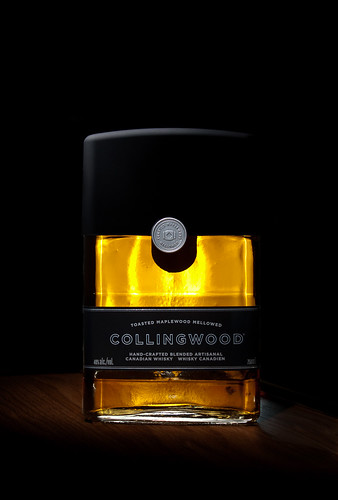
 Most recently I’ve been drinking (rī)¹ and it is delicious. I have lately been kind of developing a taste for high-rye bourbon and straight rye whiskey. I guess something about that extra spicy character and extra touch of heat appeals to my palate. This one is exceptionally complex with layers of nuanced flavor. My preferred way to enjoy this one is in a


 Red Herrings
Recent Comments